
No Deposit Bonus Casino Canada Ontario 2026 : Best Casino Deals & Bonus Terms
 King Billy
Placed first
50 free spins
tied to Buffalo Tornado
 HellSpin
50 free spins
tied to Lady Wolf Moon Megaways
No code involved
 Mirax Casino
50 free spins
tied to Cash And Spins
 Katsubet
50 free spins
tied to Wild Cash
 Verde Casino
50 free spins
tied to Book of Sirens
No code involved
 7Bit Casino
Highest spin figure
75 free spins
tied to Lucky Crown Spins
 SlotsGem
50 free spins
tied to Lady Wolf Moon Megaways
No code involved
 Ice Casino
50 free spins
tied to Book of Fallen
No code involved
 Ivibet
50 free spins
tied to Miss Cherry Fruits Jackpot Party
No code involved
 Magic365
60 free spins
tied to Gates of Olympus
No code involved
 Slotoro
50 free spins
tied to Gates of Olympus
No code involved
 V.Vegas
50 free spins
tied to Book of Dead
No code involved
 HitNSpin
55 free spins
tied to Big Bass Splash
No code involved
Open a second account somewhere new and the offer waiting there arrives with a document behind it. Some of what that document covers is written down: a count of rounds, a multiplier, a ceiling on a payout. Other parts of the same offer may never appear in it at all.
A gap like that is worth naming accurately. It means the field is unknown here, in the material this page draws on, and it does not mean the field is missing from the offer itself. Keep those two statements apart and a reader can act on the first kind of information, leaving the second kind where the casino itself publishes it rather than to any summary standing in for that. Nothing is lost by saying so plainly, while a good deal gets lost the moment the two are run together as one.
The defining feature of a no deposit bonus
Begin with the feature naming a no deposit bonus. No qualifying payment is required in order to obtain the offer, which means promotional value can reach an account with no transfer made for it. The casino publishes the terms, credits what it has undertaken to credit, and the whole arrangement rests on conditions rather than on funds sent in.
What lands is promotional value: a quantity of rounds tied to one slot the terms name, or else a sum credited into a balance kept for bonuses. Those conditions were settled before any individual account came along, which means a player reads them as published and alters none of them.
The practical appeal is narrow and real: an offer may be obtained without making a qualifying payment for that offer. That wording matters, because an account can already hold funds from earlier activity, and this category says nothing about what else an account contains. Set against the appeal is the limit. Whether promotional value ever becomes money a withdrawal can be raised against is decided by clauses fixed in advance of the claim.
Three descriptions never appear on this page. Free money is one, risk free is a second, and a payout anybody can rely on is a third. None of them matches a document whose first act is to attach conditions, and no motive is attributed to a casino for publishing such an offer.
Somebody weighing up a second account somewhere new gets a narrow consequence from this. One feature identifies the offer. Its published fields describe it. Everything about its eventual worth sits in clauses drafted by the casino itself, and that is where a reader has to go looking.
Who can be offered a no deposit bonus
Eligibility arrives as a clause rather than a category rule. Two clauses can say markedly different things, which keeps the honest general statement short. Whether a given account can be offered something is decided by the terms published alongside that offer, taken with the account itself.
Across the ten brands set out further down, the canonical material holds no eligibility condition whatever. That bounds what can responsibly be said about any of them. Nothing here attributes a one-claim-per-person limit, nor a household rule, nor an address requirement, nor a restriction naming a province. Inventing one would convert a silent record into a live rule, and avoiding that conversion is the whole business of this section. A record’s contents and an offer’s requirements are different objects, and only the first is reportable on this page.
Terms that set who may take part
The conditions doing this work live in the offer wording itself, and a second account at a second operator carries a second set of them. Nothing transfers from one brand’s document to another’s, however alike two offers appear on a comparison page.
Nor does an empty field carry a reverse implication. No conclusion arises that everybody, everywhere, on whatever account, can be offered one. The conclusion available is smaller: the supplied material carries no criteria of that kind. Neither does the gap place eligibility ahead of or behind any other condition, no such ordering being recorded for these offers. Staff at a casino can confirm how a published clause bears on one account without altering a word of it. Confirmation and amendment are different acts, and the second is not among the things a reply can perform.
How a promo code attaches a no deposit bonus
Promo code is the name for a published string. Entered where the terms direct, it fastens an offer onto a single account. The string alters no condition; its function is to bring clauses that already exist to bear.
Among the ten brands below, seven publish a string of that kind. FMIL30 belongs to Boho Casino, BONUS50 to Jet4Bet, FSBONUS50 to King Billy. FSBONUS100 turns up at Beef Casino and again at Irwin. WinBeatz publishes UPLAY100, RollXO publishes LUXE50. Two strings match each other there, a fact about text that settles nothing about the casinos, who owns them, or any content their documents have in common.
Three brands sit differently. V.Vegas, Slotoro and magic365 each leave the promo-code field not documented, and one reading only is available for that. It yields no conclusion that a code serves no function at those brands, none that a code is dispensable, and none that value arrives without one. Automatic crediting is documented nowhere among these ten, so nowhere is it inferred. An empty field sends the question to the casino’s own published wording, and asking before a claim beats asking afterwards, since activation decides whether an offer ever reaches the account.
Neither does the record suggest anywhere that a published string ceases to matter once value shows up. A string is handled here as one documented element of a route, with no position assigned to it among the other elements, the material fixing none. Whether a string carries on mattering is a question the terms settle, and not one this page settles.
What claiming involves at a Canadian casino
The record names several steps and names no order running through them. That gap deserves noticing ahead of the steps themselves. Accurate registration details make one step, being the benchmark an identity process would measure against. A second is eligibility, settled in whichever clause an individual offer carries.
Where a code is published, it belongs among them too, entered at the point the terms nominate. In the eight records documenting a title, that title fixes where credited rounds may run. A wagering condition sets the volume of play bearing on credited value. Verification may be carried out as well, at whichever stage the casino’s terms specify.
Absent from the corpus is any universal sequence through those steps, any universal verification stage and any universal crediting mechanism. No step appears here as a fixed stage, and none is placed ahead of or behind another unless a document places it there.
Documented crediting and what is not recorded
For these ten, three things are on the record everywhere: the count of rounds, the multiplier, and in six cases what a round is worth. At seven brands the claiming string is on the record as well.
Automatic crediting is on the record nowhere among the ten. What is absent is a mechanism and not an outcome: this page neither says value fails to arrive nor says it arrives unprompted. The base the multiplier applies to is likewise absent, and a later section takes that up. Published fields can be acted on; the remainder has to go to the casino as a question.
The split is what makes the section useful. Most of these brands yield six fields to anybody reading the record, while the remainder yield nothing to any reading at all. That makes the second group a list of questions to put, and not a list of deficiencies in the offers behind them.
Ontario rules on promoting a no deposit bonus
Standards applying to registered operators in Ontario bear on promotion and not on provision. Public advertising is what the documented restrictions cover, along with the public promotion of bonuses, inducements and gaming credits, all of which concerns the way an offer is placed before a broad audience.
Three settings stay apart from one another as far as the project material permits separating them. First of the three, advertising to the public. Second, the casino’s own platform. Third, direct communication allowed in cases where a player qualifies or has given consent. Identical treatment is not given to the three by the standards, and collapsing them into a single case would misstate the material.
Two sentences are accordingly missing from this page, and their absence is deliberate. Nowhere is it written that bonuses are illegal in the province, and nowhere that casinos may freely offer them. A framework addressed to promotion supports neither claim, and no legal verdict past the supplied framing is attempted. Nothing in this section travels to another province, every one of which settles such questions through arrangements of its own.
Anybody who already holds an offer takes its governing conditions from that offer’s own terms and from nowhere else. Advertising standards and promotional documents answer unlike questions, and substituting either for the other gives a wrong answer twice over. The first asks how people not yet holding an offer may be shown one. The second asks what its holder has agreed to.
Kinds of no deposit bonus a casino can publish
The documented material carries five structures. The first is free spins credited on one assigned game, with the terms fixing count and title alike. Second comes promotional credit entered into a bonus balance, attached to no single slot.
A third carries no wagering condition at all, so the yield of the credit is asked nothing, while the rest of the published clauses apply as drafted. A ceiling stays a ceiling, an assigned title stays assigned, an eligibility clause stays in force. A fourth releases quantity in stages, putting a schedule alongside the total instead of one whole credit. A fifth is drafted for accounts already open, which preserves the no-payment mechanic and aims the qualifying clause at somebody registered earlier.
Name several titles instead of one and the offer still belongs to that first structure, as a variation on it. A count arrives, a condition attaches, a ceiling may apply; what widens is the choice of slot and nothing else. That makes a variation, not a sixth structure.
Outside all five of them sits the promo code. Keying a string in activates an offer, which makes the string a route rather than a species of offer, and what gets credited is untouched by it. Nothing here claims all five turn up among the ten records further down, since that selection stands for the records it holds and nothing wider.
Naming the five serves one purpose for a reader starting somewhere fresh: pin the structure and the opening question is pinned with it. A credited sum raises a question about which categories of play are allowed. A credited count of rounds raises a question about a single title. Neither is placed above the other anywhere on this page.
Deposit-linked promotions beside a no deposit bonus
Several promotions sit near enough to this one to be confused with it. One question places each of them: what has to exist before the promotional value does?
Cashback hands back part of a sum already staked. A loss rebate operates against losses carried on a record. In each case the figure is derived from activity, meaning funding and play came first and the promotional element came after. A referral promotion turns on the referral action described in its own terms, which places the trigger beyond the mechanics of whichever account collects the award.
A reload fastens onto a subsequent transfer into an account that is open already. A deposit match draws its size off whichever transfer precedes it. Remaining promotions of that family run on identical footing, and the common element is a payment landing first.
One piece of work is done by the boundary: it fixes the opening question. Over on the deposit-linked side, that question asks what has to occur before any value exists. Over here, the answer predates the claim entirely. No category is ranked against another in this section, and nothing in the comparison is framed as a caution about the casinos involved.
Drawing the line has practical value because it tells a reader which document to open. Where a promotion rests on activity already on file, its figures emerge from that activity and are verified against it. Where an offer is obtainable with no qualifying payment, its figures were printed beforehand and are verified against the terms. Two different exercises, and only one of them applies here.
The basis for choosing these ten offers
Three things had to hold true of an offer before it could appear in the comparison set out below. The first is the category’s defining feature: a documented offer obtainable with no qualifying payment made for it. Second came a documented count of free spins, without which no offer is measurable against another. Third came a published condition attached to whatever promotional value the offer credits, an offer carrying no recorded condition falling outside the territory this page covers. Past those three, optional fields go in wherever the record carries them: what a round is worth, what ceiling applies to a payout, which studio a game is credited to, which title is assigned, which string is used in claiming. Fields the record leaves bare get marked as not documented, and a marking of that kind never removes a brand from the list. Ten documented offers follow in a fixed order. No part of the selection turns on how large an offer happens to be, on any preference, or on an assessment of the terms any of them carries.
Assigned games recorded for a no deposit bonus
Where a document picks out a slot, credited rounds belong there, and play elsewhere falls under whatever that document provides for it. A single title each is documented in eight of the ten records, as follows: Fruit Million, Aloha King Elvis, Elvis Frog Trueways, Book of Dead, Book of Ra Deluxe, Gates of Olympus, Panda Fortune Rush and Gold Rush with Johnny Cash.
Two records fall outside that pattern. Six titles rather than one appear for WinBeatz, and beyond that the record establishes nothing; no player is described here as choosing freely among them, the terms governing such a choice being absent from the material. For Irwin, no assigned game appears at all.
Studio credits run differently again. Six brands record one studio each, with BGaming credited at Boho Casino, at Jet4Bet and at King Billy, Play’n GO at V.Vegas, Novomatic at Beef Casino and Pragmatic Play at Slotoro. WinBeatz records several. At magic365, at RollXO and at Irwin the studio field is empty.
What a studio credit does is name the provider behind a game, and it does nothing else. Not one title appearing here carries a return-to-player figure, nor a figure for hit frequency, nor one for volatility, nor one for weighting. Volatility, understood as a general idea, concerns the way results spread out across a stretch of play and not any total given back, and no particular title owns it on this page. One studio credited at four brands joins none of them to another, and ownership, affiliation and management in common are all left unsuggested.
Anybody holding credited rounds finds that the assigned title settles where they may be played and settles nothing at all about their yield. Two questions, each answered in its own clause of a single document.
Validity recorded against a no deposit bonus
Reading a validity window takes two published parts. One part is a length. The second is the event that starts the count, which a document might place at the claim, at crediting, or at a later step of its choosing. Taken by itself, either part yields nothing a reader can use. A length cannot be fixed to a calendar until a starting point exists, and a starting point offers nothing to count toward until a length joins it.
For all ten brands below, validity is not documented. One meaning attaches to that sentence and no other: the project material records no validity period for any of them. Nothing more can be drawn from it.
Where a validity window appears
That silence supports none of six conclusions. Not that an offer lasts forever. Not that it runs without limit. Not that something unplayed is kept open. Not that expiry happens unprompted. Not that progress stops or starts over from session to session. Not that anything gets surrendered at some fixed point. All six would be descriptions of an offer, where an empty field describes only how much reached the record.
A published window appears in the wording that accompanies an offer’s remaining conditions. Where on a page it sits, and which part of a document holds it, both go unstated here, the material supporting neither claim. A player holding something unplayed has a specific question to put: how long, counted from what. Both halves are needed, and an answer to one of them does not answer the window itself.
What a no deposit bonus asks for in play
A wagering requirement puts a volume of play into a multiplier. All ten brands below record that multiplier as a numeral, and the figures across the set are 3x, 5x, 40x, 45x and 50x. So the multiplier is the half of the condition a reader can always find, and the findable half is not the half that fixes the size.
The base a multiplier is applied to
Repetitions of an amount are what a multiplier counts, and the amount itself goes unnamed by it. The amount itself is a separate published field, the wagering base, and the multiplier is applied to that. One document might nominate the credited bonus for that role, a second the yield of the rounds, and a third something different. One unchanged numeral then reaches a very different total according to whichever nomination governs.
A wagering base goes undocumented at every brand in the set below. No required-play total is therefore worked out for a named brand here, and no substitute is assumed for the missing field. RollXO shows the cost. Published in its record are 50x and a ceiling of CAD 75; unrecorded are the base, and what one round is worth. Two published figures sharing a record do not combine into a third, so neither a volume of play nor a payout figure comes out of the pair.
Required play and what it covers
With a base published, the step is plain. Suppose a hypothetical balance of CAD 25 and a hypothetical multiplier of 30x: required play reaches CAD 750 as one total. Those numbers belong to no brand in this set, and CAD 750 is an aggregate figure, not an amount allotted to any individual round.
Alter an input and the total alters too, which is why two accounts looking at one and the same numeral can owe unlike volumes of play. Order of reading helps. Find the base first; the multiplier second. On its own a numeral gives the shape of a condition while withholding how large it is, so whoever holds the numeral alone holds a fragment of the clause.
Even so, what the published multiplier does establish is worth having in hand. It puts an offer somewhere on a range, and across these ten the range reaches from low single digits as far as fifty. A reader learns the order of magnitude a condition sits in, and learns nothing about the sum it will meet.
Game weighting and bet limits during bonus play
Two further clauses can sit beside a requirement without ever forming part of it. Both appear here as general principles, the record documenting neither at any of the ten brands, and neither is estimated into the gap.
Game weighting settles what share of any stake counts toward a requirement, and settles it one category at a time, following whichever categories a document draws. A given stake might count fully, count part way, or count for nothing; what decides is which category held the play. Speed of accumulation is what the clause touches, not final size, and that is why matching stakes in two accounts can show up as unmatched progress.
Bet limits while a bonus is active
The maximum bet per round names no total whatever. The cap it sets governs what any one round may carry during the time a requirement remains unmet, which touches the route taken instead of the ground to be covered.
What happens once such a limit is exceeded goes unstated on this page. The question belongs with whatever document carries the clause. In the project record, meanwhile, no consequence is fastened to it whatever. Cancellation of a bonus, voiding of winnings, forfeiture of funds: the material carries none of those, and none is asserted.
Both clauses repay a question put to a specific brand, and for a single reason. This page can supply neither of them, while each one affects the working through of a requirement rather than the scale it eventually reaches. Knowing the multiplier alone is knowing a destination without any sense of the route, and these two clauses cover stretches of it.
Which offers record a studio and a promo code
Two documentation states can be read against one another, and the result counts what the record holds rather than describing how offers get written.
| Studio state | Brands | Promo code recorded |
|---|---|---|
| One documented studio | 6 | 4 of 6 |
| Several documented studios | 1 | 1 of 1 |
| Studio not documented | 3 | 2 of 3 |
Seven codes are recorded across the ten brands, which reconciles with the three states above. Coverage is all the grouping shows. A documented studio is no condition at all, a published code is no condition either, and neither field predicts what the other one will hold. The counts support no statement about drafting practice in this market, and they reach past these ten records not at all.
What a reader is able to take from the block is narrow, and usable all the same. Where a studio field is empty, the provider behind a game has to be read off the casino’s own pages. Where a code field is empty, activation has to be read off those same pages, and nothing on this one substitutes for either reading. Each gap sends the reader to one document, and neither gap is evidence about the other.
The four brands in the first row that publish a code are Boho Casino, Jet4Bet, King Billy and Beef Casino; V.Vegas and Slotoro are the two without one. In the third row, RollXO and Irwin publish a string while magic365 does not. Those are the figures behind the counts, set out so the block can be checked line by line rather than taken on trust.
Ten Canadian casino offers with a no deposit bonus
Ten documented offers follow, each read against its own record. The grouping runs by studio documentation state first, then by the form of the ceiling, then by brand name. That is presentation rather than ranking: a documented studio does not make a superior offer, and a ceiling form is no kind of quality.
King Billy repays a pause before the list, since its record fills every tracked field there is: fifty rounds, CAD 0.15 behind one of them, 50x as the multiplier, CAD 75 as the ceiling, Elvis Frog Trueways as the title, BGaming as the studio and FSBONUS50 as the string. Filling every field makes an offer fully describable. It does not settle anything about the offer’s merits, and the base stays unavailable even so, that field being unrecorded right across the set.
Every empty field in that table is written out in words, so no cell can be read as a zero, and nothing in it has been calculated or converted. The promo-code column is included because activation belongs to the same record as the condition. The assigned title is handled in its own section above rather than repeated here, which keeps five columns rather than seven and leaves the table readable on a narrow screen.
Boho Casino: a CAD 150 ceiling on Fruit Million rounds
Fruit Million holds these rounds, with BGaming credited as the studio standing behind the title. Thirty rounds are what the offer credits, FMIL30 is published for claiming them, and the payout ceiling on record reads CAD 150.
The condition fastened to the credited value reads 40x. What one round is worth is not recorded, so no stake across the set of rounds can be stated, and the ceiling does not supply that figure, a ceiling and a round value measuring different things.
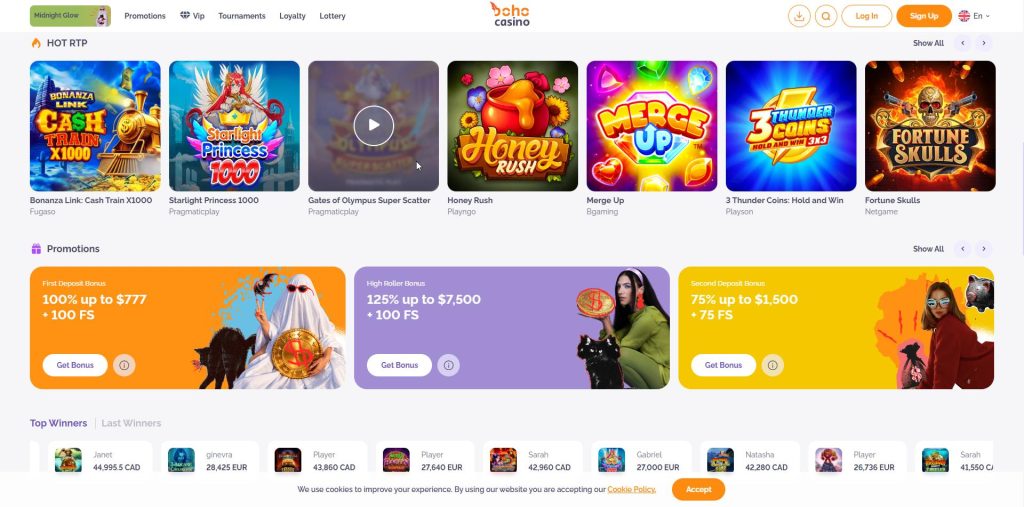
Jet4Bet: a CAD 150 cap with promo code BONUS50
CAD 150 is the ceiling this record publishes, given as a cash figure rather than as a multiple. BGaming takes the studio credit, with Aloha King Elvis as the assigned title.
Fifty rounds make up the offer and 40x is the multiplier recorded against it. BONUS50 is published for claiming. Left empty is a round’s worth, putting any stake across the rounds beyond what this entry can state. Nothing estimates it, and the published ceiling supplies no substitute.
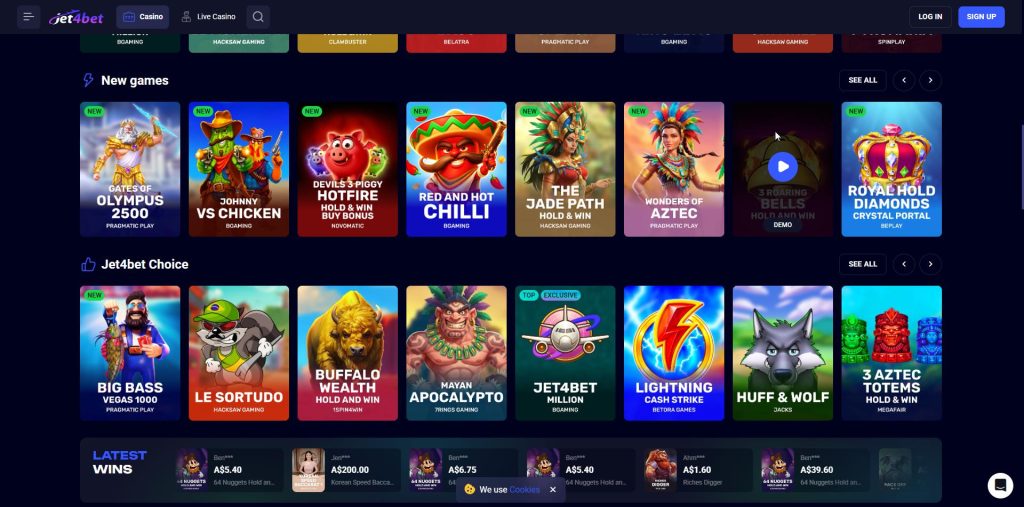
King Billy: CAD 0.15 spins on Elvis Frog Trueways
CAD 0.15 is placed behind one round at this brand by the record, with 50x published alongside as the multiplier. Elvis Frog Trueways carries the rounds, the studio credit reads BGaming, and the count comes to fifty in all.
CAD 75 is the published ceiling and FSBONUS50 the string for claiming. Every tracked field carries a value here, which makes the offer fully reportable while leaving the base behind the 50x as unavailable as it is elsewhere in the set.
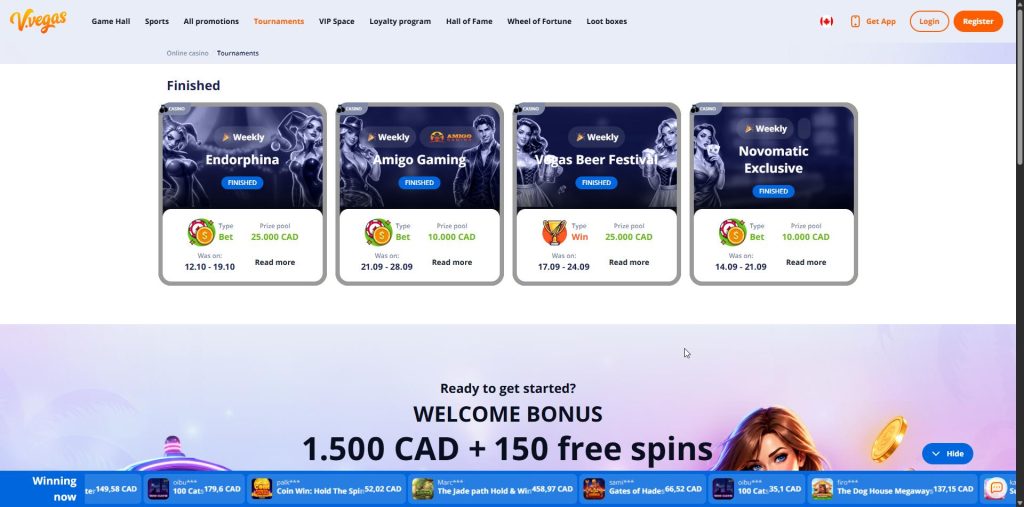
V.Vegas: Book of Dead from Play’n GO
Book of Dead appears as this record’s title, credited to Play’n GO. The offer carries fifty rounds. One round comes to CAD 0.30, and the multiplier published against the offer reads 3x.
CAD 38 stands as the ceiling. Both of those are recorded figures, and the project record does not establish what the ceiling is measured against, so the two are stated and no relationship between them is drawn. The promo-code field is empty, which leaves activation at this brand to whatever wording it publishes, and to nothing on this page.
Beef Casino: promo code FSBONUS100 on Book of Ra Deluxe
FSBONUS100 is published here as the string for claiming. Book of Ra Deluxe takes the rounds, a hundred of them credited, each one carrying CAD 0.15, and Novomatic sits in the studio field.
The multiplier reads 45x, and the ceiling arrives in multiple form, at ten times the bonus. That unit is where it stays, whatever sum it would multiply being missing from the record, and nothing here restates it in cash. Six of the tracked fields hold values at this brand.
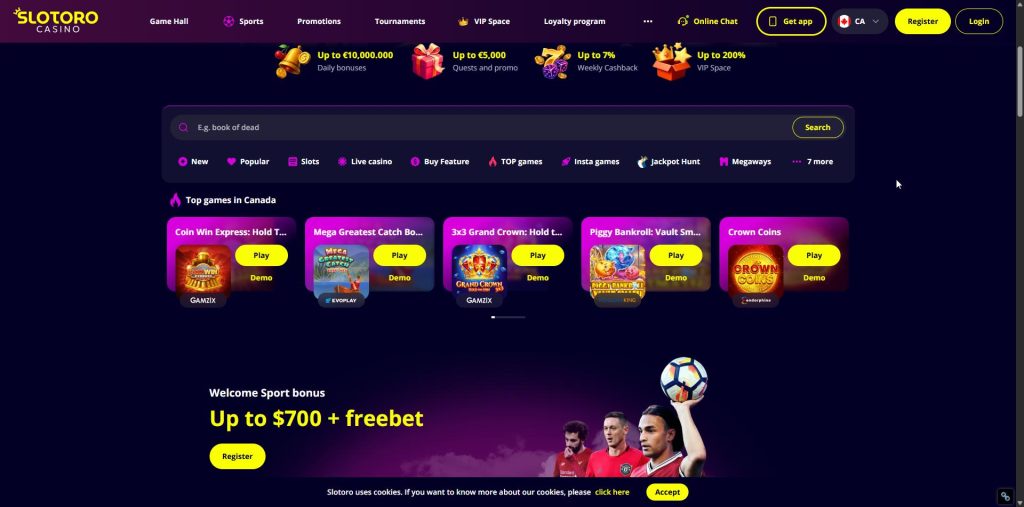
Slotoro: a cap set against winnings on Gates of Olympus
Winnings are what the ceiling here is measured against, at three times winnings, and no other record in this set uses that form at all. Pragmatic Play fills the studio field, Gates of Olympus the title.
The count is fifty rounds, CAD 0.30 each, and 5x is the published multiplier. No arithmetic touches the ceiling, a winnings figure being needed first and none documented. Nothing sits in the promo-code field, leaving activation to this casino’s terms.
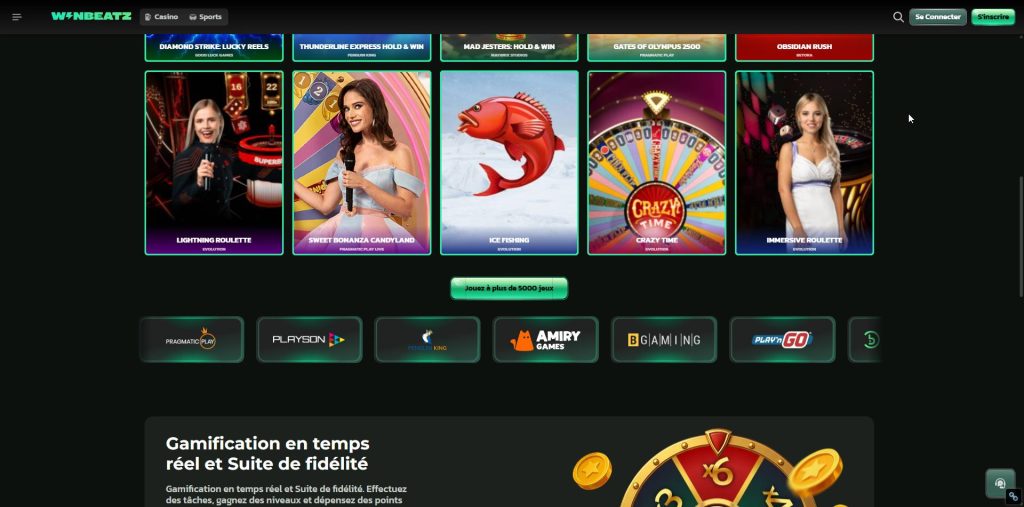
WinBeatz: six documented titles claimed with UPLAY100
UPLAY100 is published for claiming at this brand, and six titles rather than one are documented for the offer. Several studios are documented as well, which makes this the only record in the set doing either of those things.
A hundred rounds are credited and the multiplier reads 45x. No ceiling is recorded, which means the record publishes none rather than that none applies, and a round’s worth goes unrecorded here as well. How those titles relate to the credited rounds is left to this casino’s wording, and no answer is supplied here.
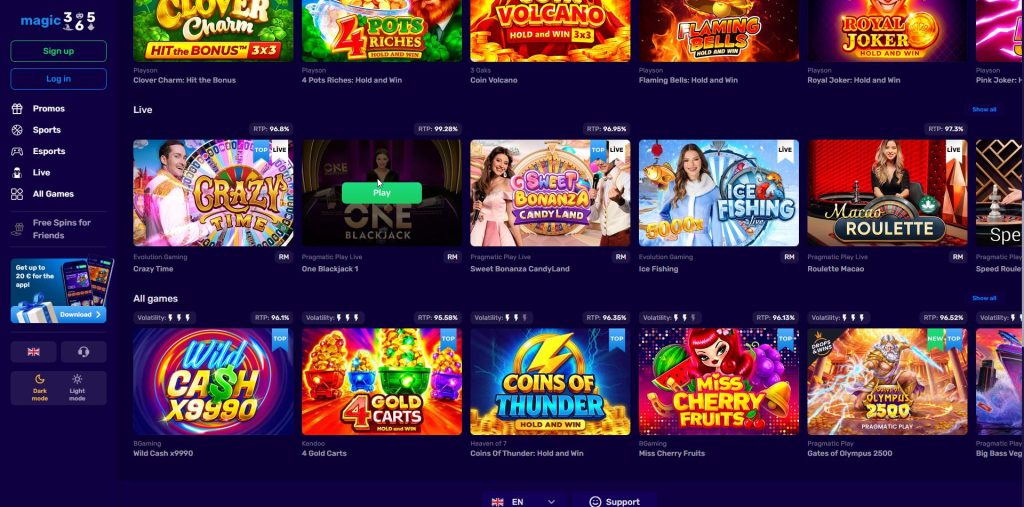
magic365: thirty rounds against a CAD 8 ceiling
A round comes to CAD 0.30 in this record, with 45x published against the offer as its multiplier. Thirty rounds make the count, and the title assigned is Panda Fortune Rush.
A ceiling of CAD 8 is published for the offer. Both the studio field and the promo-code field are empty, which puts the provider behind the title, and the route to activation, with the casino rather than with this page. Five tracked fields hold values.
RollXO: 50x wagering with a CAD 75 cap
A ceiling of CAD 75 is published in this record as a cash figure. Gold Rush with Johnny Cash is the title assigned, and LUXE50 the string published for claiming.
Fifty rounds make the count, with 50x recorded as the multiplier. Two fields stand empty: a round’s worth, and the studio the game is credited to. Neither gets estimated here, and the pair of published figures yields no third figure between them, a point the wagering section returns to.
Irwin: a hundred rounds claimed with FSBONUS100
FSBONUS100 is published for claiming here, and a hundred rounds are credited under the offer. CAD 0.15 is the recorded worth of one of them, with 45x as the published multiplier.
The ceiling here takes multiple form, set at ten times the bonus, and no conversion of it is attempted. Neither assigned game nor studio is documented at this brand. Which title the credited rounds run on therefore comes out of this casino’s terms, an unrecorded title being different from an absent one.
A no deposit bonus account and identity verification
Identity verification has as its subject the holder of an account, not any promotion the account contains, and that is the line dividing it from every condition above. A casino may run such a process. What follows from running it is determined by the process itself, read with whichever terms apply.
It redrafts nothing an offer published. Multiplier, ceiling, assigned title, eligibility clause: each reads afterwards exactly as before. This page assigns the step no stage, sets out no list of documents for it, quotes no processing interval and describes no outcome whatever, none of the ten records holding one.
Opening a second account somewhere else can mean meeting a different process altogether, because such a process belongs to the casino running it and not to the category at large. Hence the separation kept here between the step and an offer’s conditions: treat a check as one of the promotion’s clauses and a reader goes looking for it in the wrong document. Staff can explain how one casino proceeds, and say what a given account currently holds, while altering nothing the terms say. That is a useful reply and a limited one.
What the record establishes about the step stops at its subject matter. The person behind an account is what it concerns, which makes every question arising from it an account question rather than a question about the promotion. Those get answered in whatever a casino publishes about its own process, and that is also where its requirements appear, not among an offer’s conditions.
Payment methods for a first withdrawal in Canada
Families of payment method are recorded for the Canadian market as a whole, not brand by brand, so no availability is claimed for any of the ten records above.
Payment families that may be used for funding, subject to the applicable terms: Interac, cards, prepaid options, e-wallets, cryptocurrency, and further routes arranged by way of a bank account.
Withdrawal routes may include: the same families, where the applicable terms provide for them in that direction.
Keeping those two lines apart is deliberate, since funding by one route does not make that route a payout’s way back. Direction gets settled in the terms. How a family keeps value, or moves it, is described nowhere here, no fee is asserted, no speed, no processing interval, and no mechanics are attributed to any family named.
A first payout belongs here as a concept and not as a schedule. The terms in force may attach a verification step to it, and whether one is attached rests with the casino’s process. Published payment wording does make one thing checkable, which is the condition, in both directions, and a reader gains more from consulting it while picking a method than from consulting it after a request goes through. None of the brands above carries a route on this page, the record carrying none.
Currency is a field on each side. Two currencies are in question, one on the account and one on the payment, and where they differ with the applicable terms providing for it, conversion may become relevant. Where they match, it may not. Nothing of the rate, the fee, the timing or the mechanism such a conversion would involve appears in the supplied material, and nothing here says a sum held in another currency converts of itself.
When a no deposit bonus balance turns into cash
Here is the principle that governs the whole question. Completing a wagering requirement does not by itself establish conversion or withdrawability. Meeting the requirement closes the requirement, and what the account holds from that point is decided in separate wording.
That wording is where three distinct answers live: what converts, what remains behind, and what may become available for a payout request. The project record documents no conversion clause for any of these ten brands, which leaves all three with the operator’s own terms. No universal model is offered in its place, and no timeline is attached to the step, because the material holds neither.
Cashable and non-cashable funds
Two directions are open to published wording, and the contrast between them is the plainest instance of a balance altered set against a balance untouched. Describe a bonus as cashable and the credited sum may go across together with the yield it produced. Describe it as non-cashable and the casino retains that sum, the yield alone carrying on.
Which description governs is a feature of one offer, never of the category. Drafting by itself can leave a pair of accounts that cleared identical numerals standing in unlike positions, and neither direction is held out here as the arrangement to prefer. Both are named so that a reader knows what to ask the terms, not so that an answer is supplied.
The question itself can be put plainly enough. Of the credited value, and of whatever it goes on to generate, which parts may be requested as a payout and which stay behind with the casino? One question, one answer for each offer, written into the conversion wording, and no figure elsewhere in the document answers it. Discharging a condition is one statement; making a balance available is another.
Withdrawal caps recorded in no deposit bonus terms
Published in an offer’s terms, a withdrawal cap fixes a ceiling. Its reach covers how far a payout extends and nothing further, so reading one tells a player nothing about the play that came before.
Four positions turn up across the ten records. A fixed cash figure is published at six brands: Boho Casino and Jet4Bet at CAD 150, King Billy and RollXO at CAD 75, V.Vegas at CAD 38, magic365 at CAD 8. Beef Casino and Irwin express theirs as ten times the bonus. Slotoro measures against winnings instead, three times over. For WinBeatz the cap field stands empty.
No scale is shared by those forms, and no form gets converted into another here, which rules out setting a cash figure beside a multiple as if a single quantity were being measured. V.Vegas illustrates the limit. Its record publishes CAD 0.30 for one round and CAD 38 as the ceiling, both reportable, while the project record never establishes what that ceiling is measured against. The pair are set out together, with no relationship calculated from the two.
What a cap does not establish
Scope is the piece the record omits. The project record documents no scope for any of the nine published ceilings. Nothing here therefore ties a cap to one request, one withdrawal, one day, one offer, one promotion, one account, or the lifetime of an account, and nothing says which funds fall under it or across what period it gets measured.
Nor is a ceiling a promise. A published figure establishes neither a payout of that size nor a payout of any other. Where the field stands empty, the brand goes undescribed as uncapped and undescribed as unlimited: an unrecorded cap tells a reader the record publishes none, which differs from none applying to the offer.
Account details behind a no deposit bonus claim
Fields of its own are carried by every account, and opening one somewhere new means meeting a fresh set of them. Separating those from an offer’s conditions is worth the effort, because each set answers to a different document.
A phone or a tablet alters none of that. Opening something claimed on one establishes nothing about its conditions; the hardware has no bearing. Nothing in the record describes an app at a brand above, no interface whatever is described, and three claims stay out of this page: that a display on one device matches a display on another, that anything carries across devices, and that two devices show the same thing. On whatever screen they appear, published terms are still the reference.
Account currency and licence information
The currency recorded on an account is one field; the licence a casino holds is a second and quite separate one. An account currency goes unrecorded at every one of these ten brands, and no licence is attributed to them here either.
Licensing belongs to a different layer from an offer’s terms, and the two are not read as substitutes. What an operator publishes about its own authorisation is where that question is answered, and this page draws no conclusion from any such publication.
Registration details on a casino account
Details supplied at registration form the reference an identity process would work against, and that is why accuracy in them matters to the account holder rather than to the offer itself. Nothing about them is recorded for the ten brands above.
They also sit outside eligibility, which is a clause in an offer rather than a field on an account. Holding the two apart matters to anybody starting somewhere fresh, since a question about an account and a question about an offer get answered in different places. One is answered in whatever the casino publishes about accounts at large, the other in the wording accompanying a single promotion.
Gambling rules in the provinces and territories
A player’s location decides which framework reaches them. Canada puts that question to its provinces and its territories, not to a national authority, and each framework so established governs where an account may be held, which operators and products are authorised there, and on what conditions. None of it overlaps with the requirements an individual offer’s terms impose.
Three arrangements in the supplied material show how unlike the answers can be. One has private operators working inside a framework that iGaming Ontario conducts and manages, regulated by the Alcohol and Gaming Commission of Ontario, in a market opened on 4 April 2022. Another is Alberta’s, a market opened on 13 July 2026, where the record names two bodies: Alberta Gaming, Liquor and Cannabis, plus the Alberta iGaming Corporation. The third predates both. An online gaming framework dated to 1999 rests with the Kahnawake Gaming Commission, established in 1996 and operating in the Mohawk Territory of Kahnawà:ke.
Two distinctions come out of all that. A permit held under the Kahnawake framework differs from a provincial registration, and a licence obtained abroad differs again from a provincial authorisation. Separate kinds of instrument, and no one of them performs the others’ work.
Gambling age across the provinces
Canada sets no single national gambling age. The figure 18 in Alberta, Manitoba and Quebec is what the supplied project material records, with 19 recorded for the remaining provinces and territories. Which one applies follows from a player’s own jurisdiction, and the pair are never combined into a countrywide number.
The age is set by no promotional document. It comes out of a provincial or a territorial framework, whatever figure a page about bonuses may happen to carry.
Tax treatment of casino winnings
Under the supplied project material, money won from recreational gambling is not treated in Canada as taxable income. That is the principle the record provides, and nothing further on the subject appears here.
Circumstances differ between individuals, a limit on the principle rather than an exception carved out of it. Tax advice is not what this section offers. There is no rate here, no threshold, no calculation, and no invented variation between provinces.
Common questions on a no deposit bonus claim
Does a casino have to publish the wagering base?
No universal obligation of that kind is established in the corpus. The base is a field separate from the multiplier, and none of the ten records above holds a value for it.
Must free spins be played in a single session?
Nothing in the record establishes a one-session requirement, and nothing establishes that credited rounds persist between sessions either. Whichever applies is set in the offer’s own wording.
Is a promo code needed again for a second offer?
The corpus does not establish whether a published string can be reused across offers. Each offer carries its own activation terms, which is where the answer for that offer sits.
Does a larger withdrawal cap mean a better offer?
A cap is a published figure, not a measure of quality. Comparing two ceilings compares two numbers, and neither tells a reader what the rest of either document contains.
Are all free spins worth the same amount?
Six of these ten brands record a value for one round and four do not. The recorded values differ between brands, and the four unrecorded ones are unknown rather than equal.
Does a casino record how long an offer lasts?
Validity windows do appear in some documents; none of these ten records carries one. That absence is a fact about the material and not about the offers, so no expiry outcome follows.
Can an offer be claimed on an account that has already deposited?
Specific terms decide it, and the canonical material shows no eligibility condition at these ten brands. Nothing here establishes a rule either way for an account already funded.
Does the studio behind a game set the wagering rules?
What a studio credit names is the provider behind a game. Conditions fastened to promotional value come out of published terms, not out of whoever built the slot.
Is a cap measured against the bonus or the winnings?
Both forms appear in this set, alongside six fixed cash figures. Only the published wording for a given offer determines which form that offer’s ceiling takes.
Does every casino ask for the same information before a payout?
No universal list is documented anywhere. What gets asked for follows from a casino’s own process together with the terms that apply, and no such list appears in these ten records.
Does a provincial gambling framework replace the casino’s bonus terms?
The two do different jobs. A framework governs authorisation and where an account may sit; an offer’s terms govern the promotional value, and neither rewrites the other.
Does living in Ontario change what a casino may advertise?
Public promotion is what Ontario’s documented standards cover, naming bonuses, gaming credits and inducements. What they address is the reaching of a broad audience, not the requirements an offer already held imposes.
Where can a player in Canada find gambling help?
Provincial services appear further down on this page, alongside a directory of the arrangements province by province. Every one of them answers at the number listed there.
Casino support and no deposit bonus terms
A second account at a new casino comes with its own published wording, and support is the channel for asking about that wording rather than an alternative to reading it.
Three things support is able to do are worth naming here. It can clarify what published wording means. It can confirm information specific to a single account, such as what that account is currently holding. It can explain how the operator’s own process works, verification among other things.
What support does not do matters just as much. It does not rewrite terms, change a ceiling, change a multiplier, change an eligibility clause, or alter anything a provincial framework has set. Nothing here describes it as the only route to an answer, and nothing places it above the published terms as a source. No channel type is named for any of the ten brands, no response interval is quoted, and no judgement about service is offered, the record supplying none of the three.
The practical use of the distinction is that it tells a reader what a reply can settle. A reply can settle what a clause means and what an account contains. It cannot settle what a clause ought to say.
Account limits and help for bonus play
An offer held in an account is gambling value whatever else sits beside it, and no published condition is ever grounds for carrying on past a limit somebody set for themselves. The controls below are settings on an account rather than terms in an offer, each put as something a casino may make available and document in its own responsible-gambling material or account-control material.
- A deposit limit caps what enters an account over a stretch of time the player picks.
- A time limit bounds how many hours of use an account gets; a time-out stands it down for a stated interval.
- A session reminder gives the elapsed time while a session is still running.
- Play history keeps past activity on file, which suits anyone preferring to check rather than remember.
- Self-exclusion goes further, and provinces administer it individually in place of any countrywide scheme.
Nothing here says that every casino provides every one of those, or that a given account carries any particular one of them. Nor are promotional terms assumed to be where any of them is documented, since an offer’s wording and an account’s settings are published in different places entirely.
Where help is listed across Canada
ConnexOntario answers at 1-866-531-2600, and Gambling Support BC at 1-888-795-6111. Moving west to east among the remaining listings, the Alberta Health Services Addiction Helpline answers at 1-866-332-2322, the Saskatchewan Problem Gambling Help Line at 1-800-306-6789 and the Manitoba Addictions Help Line at 1-800-463-1554.
Beside those provincial listings sits a directory from the Responsible Gambling Council, setting out the arrangements province by province, which is a sensible starting point where the applicable service is unclear. No claim is made for a listing past the fact of its appearance there, and no listing substitutes for another.